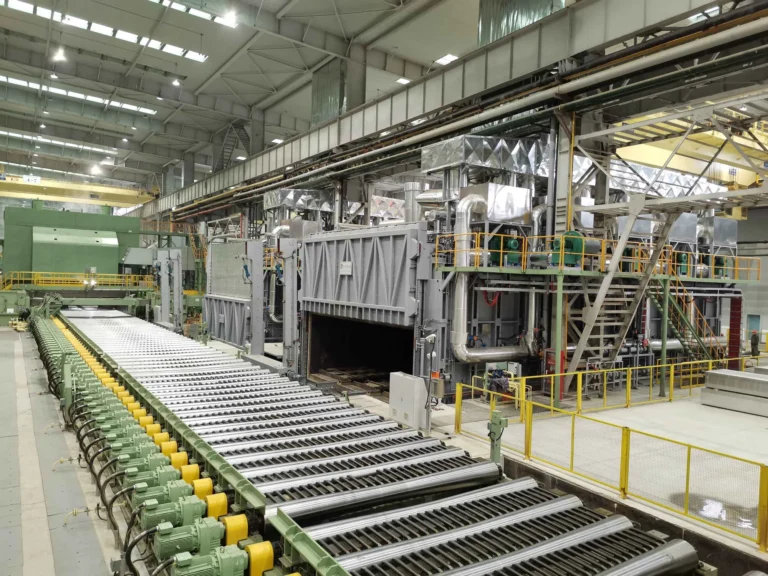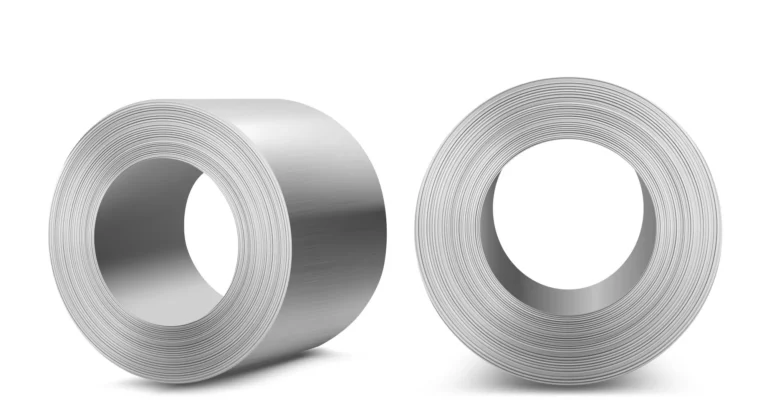
To build a complete aluminium extrusion facility, you need a full set of aluminium extrusion equipment that covers the entire process, from heating and extrusion to cooling, straightening, and finishing.
Core Equipment List:
- Extrusion press machine
- Billet heating furnace
- Extrusion die system
- Run-out table
- Cooling system
- Stretching machine
- Cutting system
- Aging furnace
In simple terms, a complete aluminium extrusion plant setup includes extrusion machinery, heat treatment systems, and material handling and protection systems.
Overview of the Aluminium Extrusion Process
Before selecting equipment, it is important to understand the extrusion workflow. This helps clarify the role of each machine in the production line.
Step-by-Step Process:
- Billet Heating
Aluminum billets are heated to approximately 400–500°C to improve plasticity - Extrusion
The heated billet is forced through a die using an extrusion press machine - Profile Handling
Hot aluminum profiles are transferred via the run-out table - Cooling
Profiles are cooled using air or water to control material properties - Stretching
Internal stresses are removed and straightness is improved - Cutting
Profiles are cut to the required length - Aging
Heat treatment enhances mechanical strength
Each stage relies on specific aluminum extrusion process equipment to ensure stable and efficient operation.
Core Aluminium Extrusion Equipment Explained
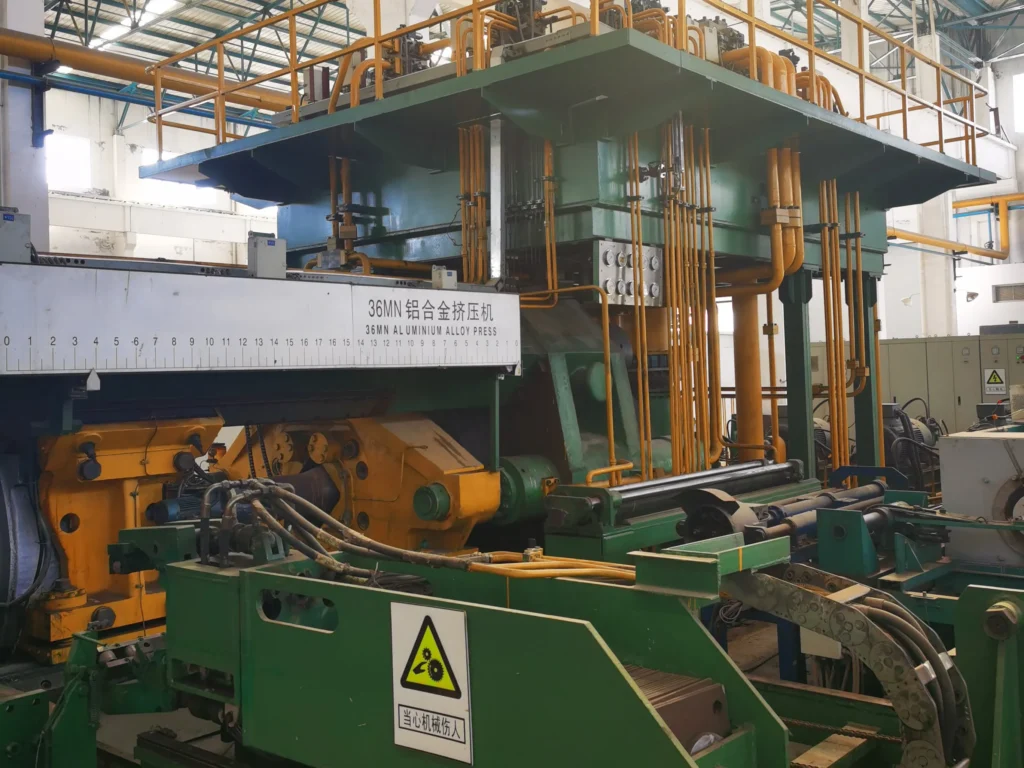
1. Extrusion Press Machine
The extrusion press machine is the core of the entire production line.
Functions:
- Generates extremely high pressure, often several thousand tons
- Forces heated aluminum through the die
Types:
- Direct extrusion
- Indirect extrusion
The press capacity determines production output and the size range of profiles.
2. Billet Heating Furnace
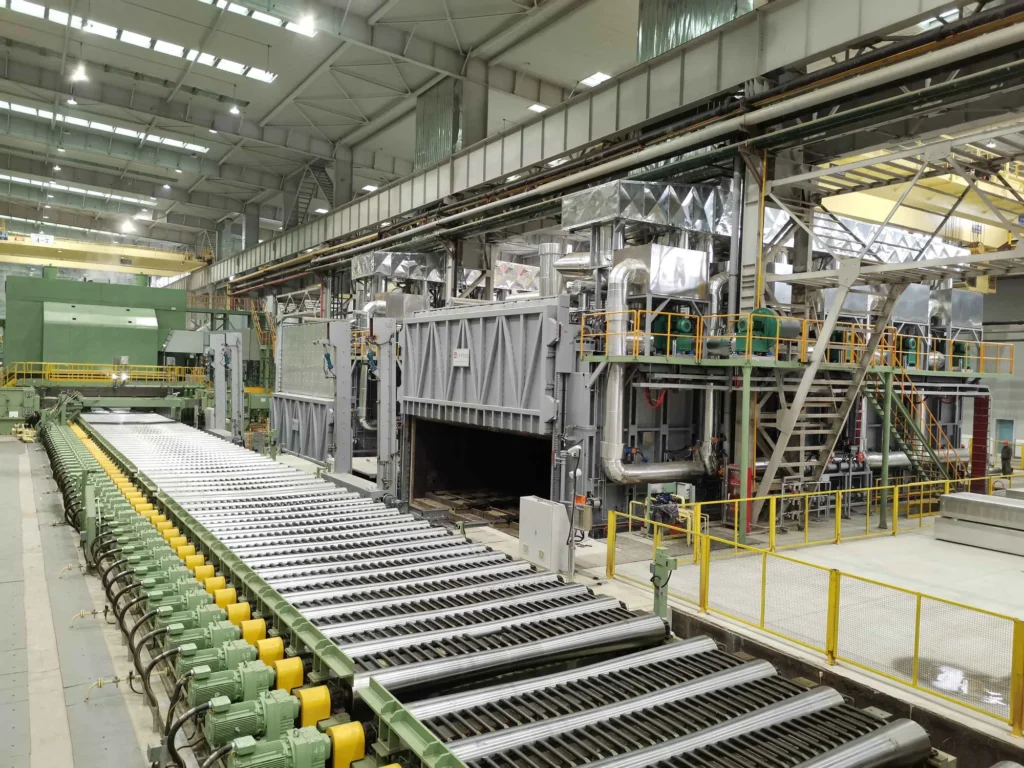
The billet heating furnace ensures billets are heated evenly before extrusion.
Key considerations:
- Temperature accuracy
- Heating uniformity
- Energy efficiency
Poor temperature control can lead to extrusion defects.
3. Extrusion Die System
The die system defines the final shape and precision of the product.
Functions:
- Controls cross-sectional geometry
- Affects surface finish
- Determines dimensional tolerances
High-quality dies are essential for consistent production.
4. Run-Out Table
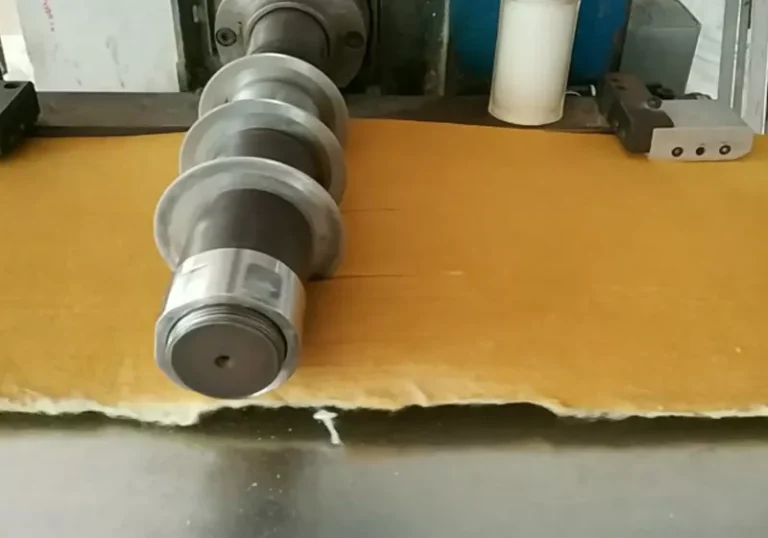
The run-out table supports and transports high-temperature profiles after extrusion.
Key features:
- Heat resistance
- Stable conveying
- Prevention of deformation
It plays a critical role between extrusion and downstream processes.
5. Cooling System
The cooling system directly impacts final material properties.
Methods:
- Air cooling
- Water quenching
Cooling rate influences strength and microstructure.
6. Stretching Machine
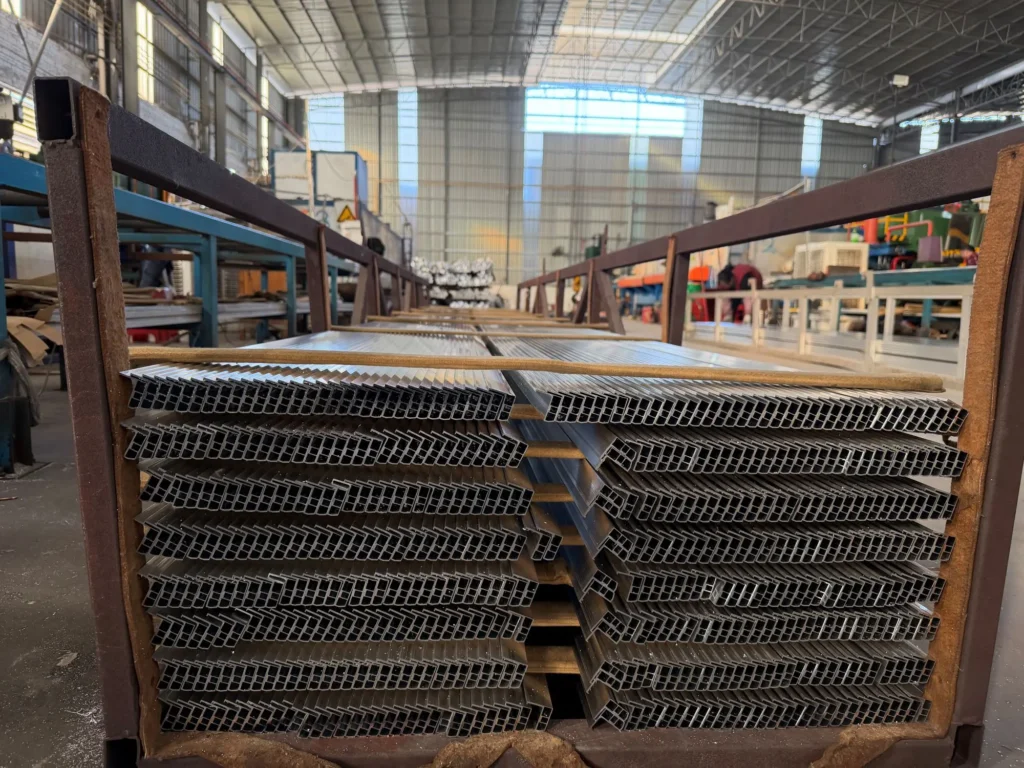
The stretching machine removes internal stress.
Functions:
- Improves straightness
- Enhances dimensional stability
7. Cutting System
The cutting system ensures precise length control.
Requirements:
- High accuracy
- Automated operation
8. Aging Furnace
The aging furnace is used for heat treatment.
Functions:
- Improves mechanical properties
- Stabilizes material structure
Supporting Equipment in Aluminium Extrusion Lines
In addition to core machines, supporting systems are equally important.
Key Supporting Systems:
- Conveyor systems
- Automation control systems
- Material handling systems
Importance of Heat-Resistant Materials
During extrusion:
- Aluminum profiles can exceed 500°C
- Surfaces are highly vulnerable to scratches and contamination
This makes high-performance, heat-resistant materials essential.
Calm’s Professional Solution
In aluminium extrusion operations, material protection during high-temperature handling directly affects product quality and yield.
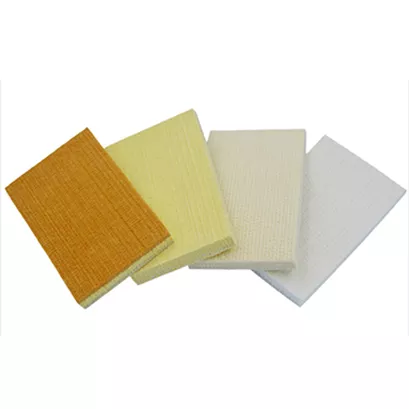
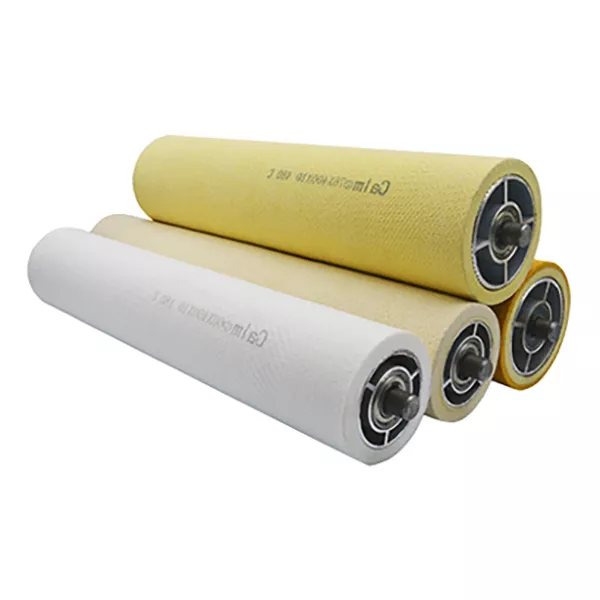
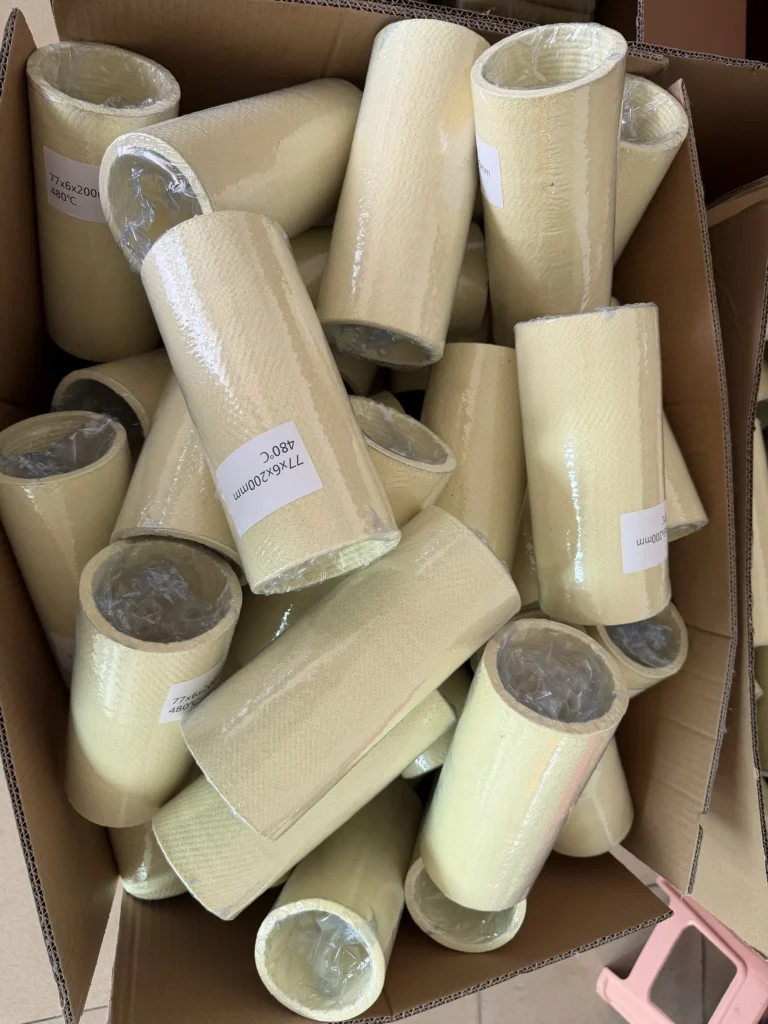
With over 20 years of industry experience, Calm specializes in high-temperature industrial felt solutions for extrusion lines.
Core products include:
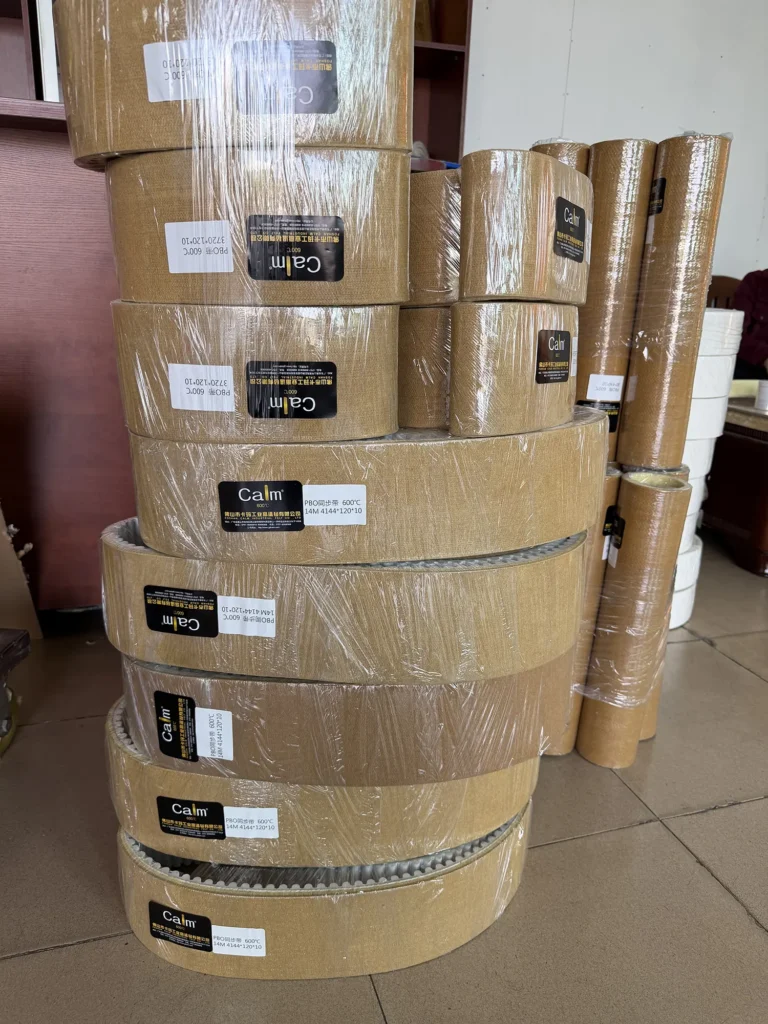
- Heat-resistant conveyor belts
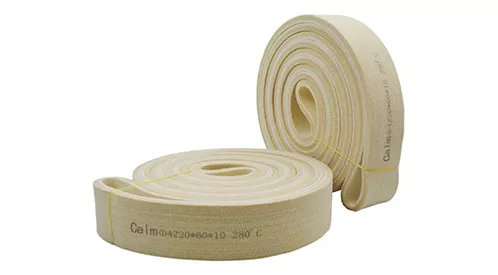
- Nomex felt strips
- Kevlar felt rollers
- Spacer sleeves
Material capabilities:
- PBO up to 600°C
- Kevlar up to 480°C
- Nomex up to 280°C
- Polyester up to 180°C
Supported by advanced automated production lines and strict quality control systems, Calm’s solutions help:
- Prevent surface damage
- Improve conveying stability
- Extend equipment lifespan
These materials have become an essential part of modern aluminium extrusion equipment systems.
How to Choose the Right Aluminium Extrusion Equipment
Selecting the right equipment requires a comprehensive evaluation of your production needs.
Key Factors:
- Production capacity
- Profile complexity
- Level of automation
- Energy efficiency
- Budget constraints
Typical Configuration Scenarios
Small-scale operations:
- Medium or low-tonnage presses
- Semi-automated production lines
Large industrial plants:
- High-tonnage presses
- Fully automated systems
- Complete supporting equipment
Benefits of Advanced Aluminium Extrusion Equipment
Modern extrusion equipment offers several advantages:
- Higher production efficiency
- Consistent product quality
- Reduced material waste
- Lower long-term operating costs
FAQs About Aluminium Extrusion Equipment
What machines are used in aluminium extrusion?
Key machines include extrusion press machines, heating furnaces, cooling systems, and more.
How much does aluminium extrusion equipment cost?
Costs vary widely depending on scale, typically ranging from hundreds of thousands to several million dollars.
What affects extrusion quality the most?
- Die design
- Temperature control
- Material handling and protection systems
How to maintain extrusion machines?
Regular maintenance, lubrication, and inspection of critical components are essential.
What is the lifespan of extrusion equipment?
Typically 10–20 years, depending on maintenance and usage conditions.
Conclusion — Building an Efficient Aluminium Extrusion Plant
Building an efficient extrusion facility requires more than just purchasing aluminium extrusion equipment. It involves proper system integration and reliable supporting materials.
Every stage, from extrusion to handling, directly impacts final product quality.