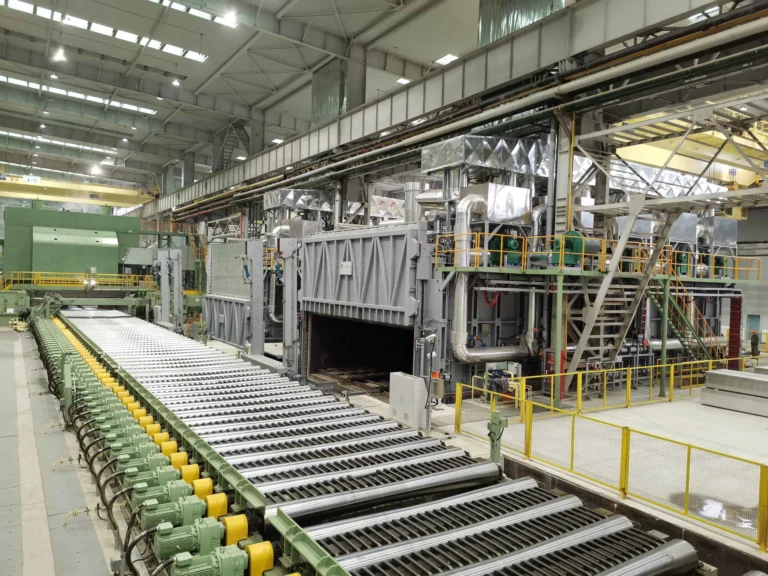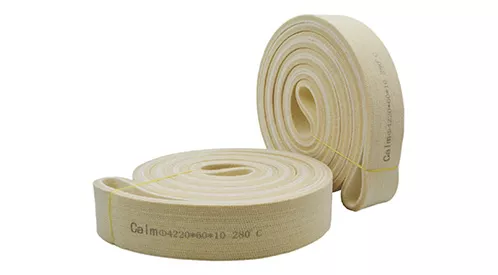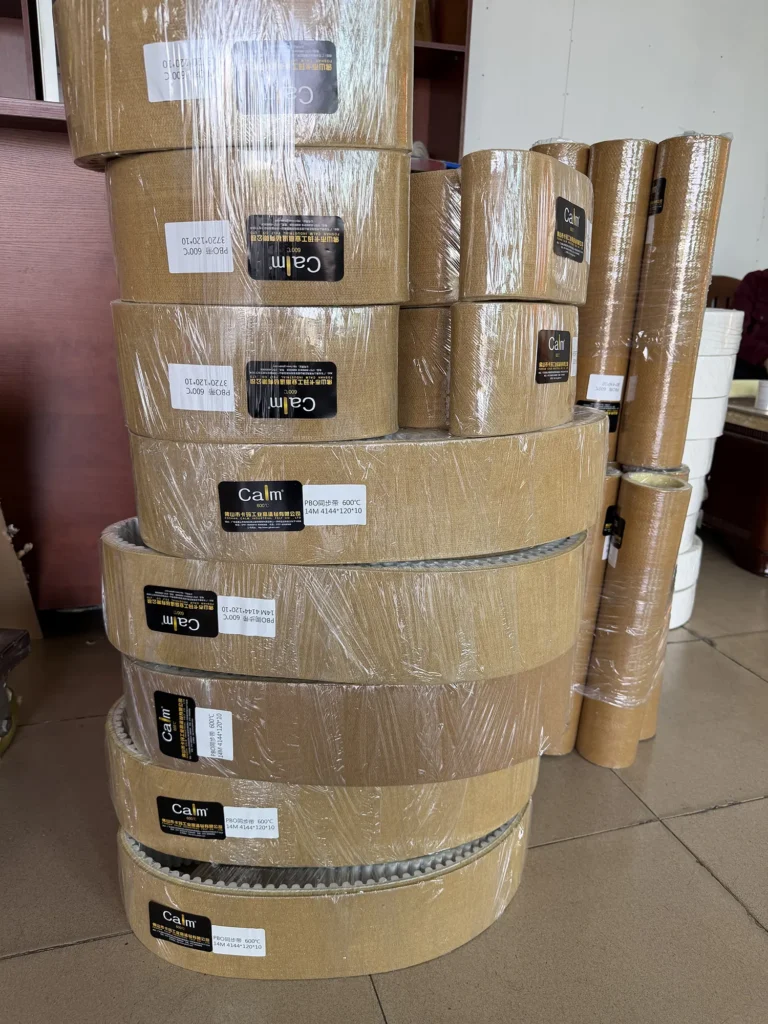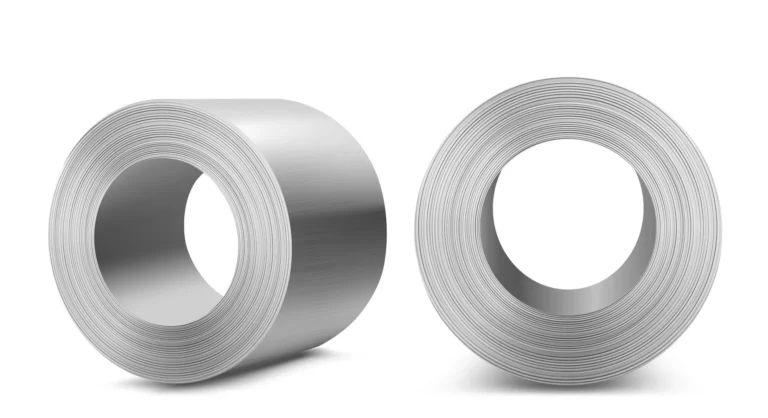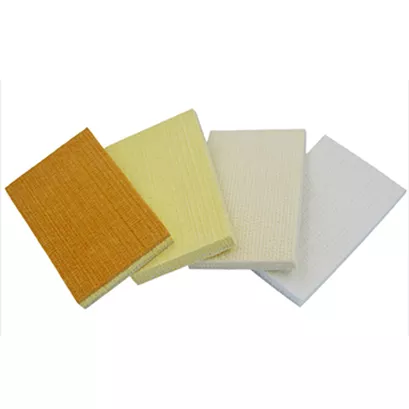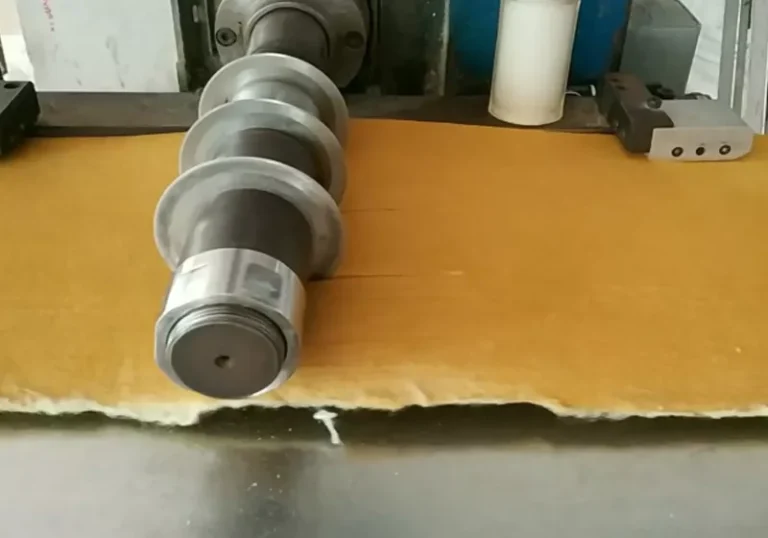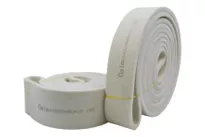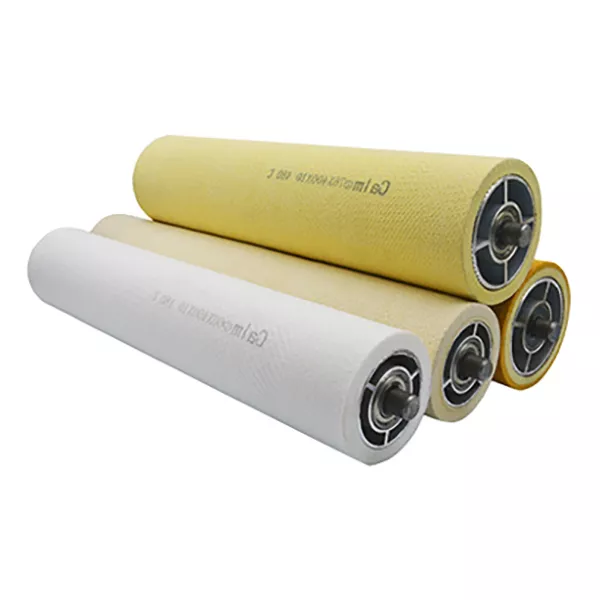
A Kevlar conveyor belt is a high-temperature industrial felt belt made with Kevlar (para-aramid) fibers, designed to transport hot materials while minimizing wear, friction, and surface damage. Thanks to its excellent heat resistance, high tensile strength, and abrasion resistance, Kevlar conveyor belts are widely used in aluminium extrusion production lines, where newly extruded profiles must be conveyed safely through high-temperature processing stages.
Compared with conventional conveyor belts, Kevlar felt belts offer greater durability in demanding environments and help maintain product quality by providing a soft, heat-resistant contact surface.
This guide explains how Kevlar conveyor belts work, their key properties, common applications, how they compare with other high-temperature felt materials, and how to choose the right belt for your production line.
What Is a Kevlar Conveyor Belt?
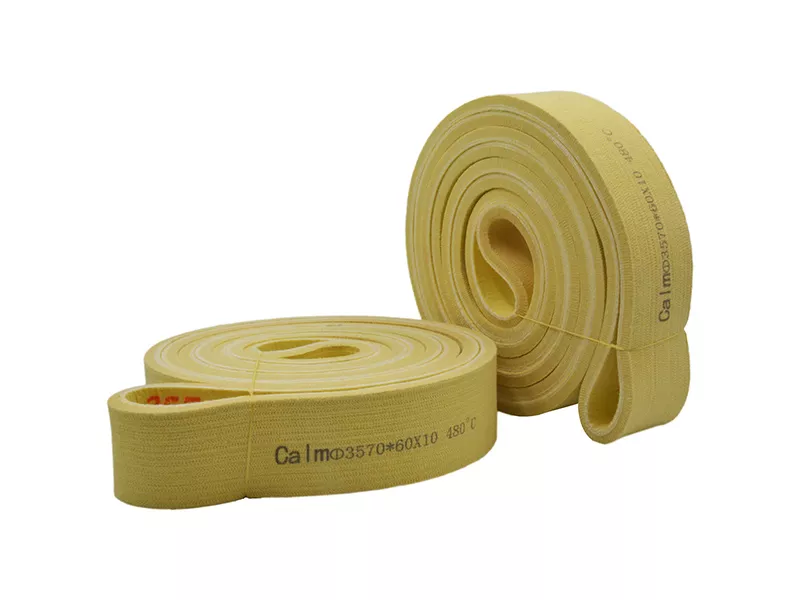
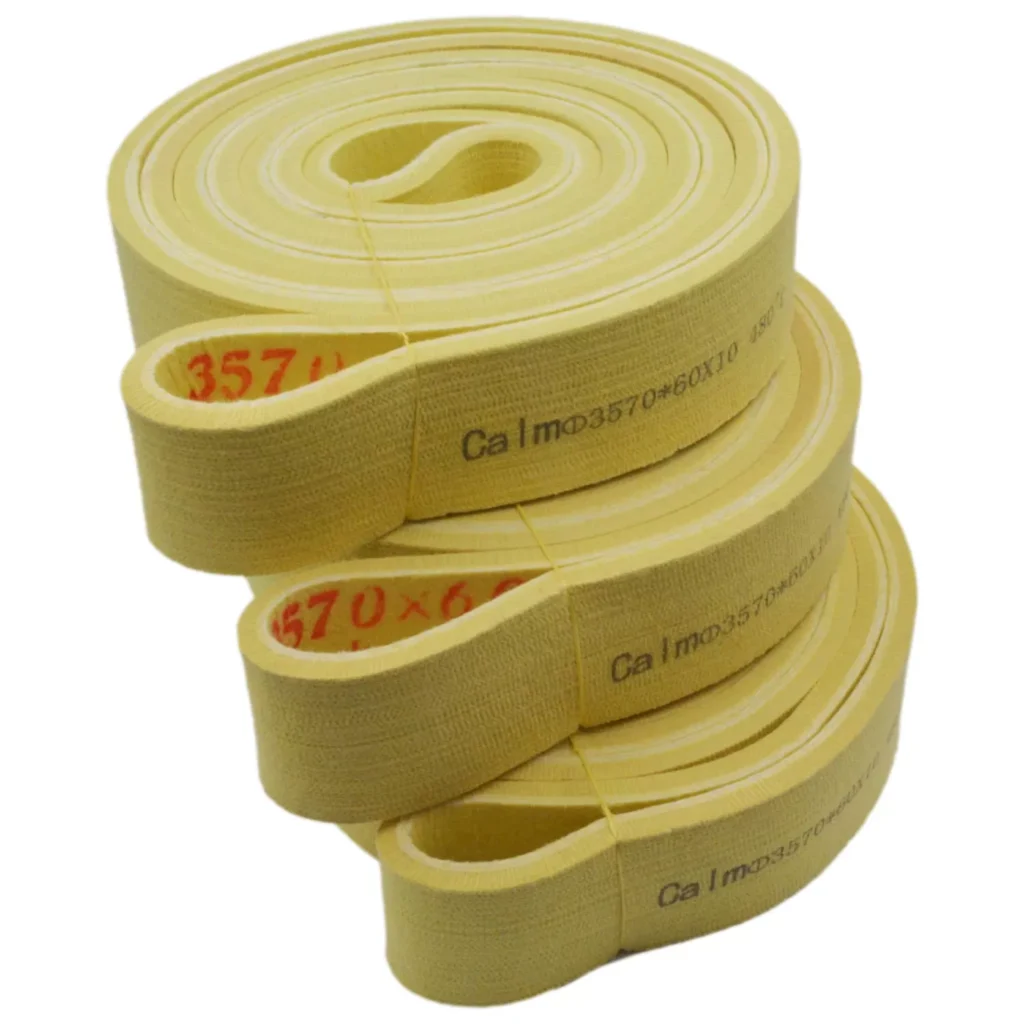
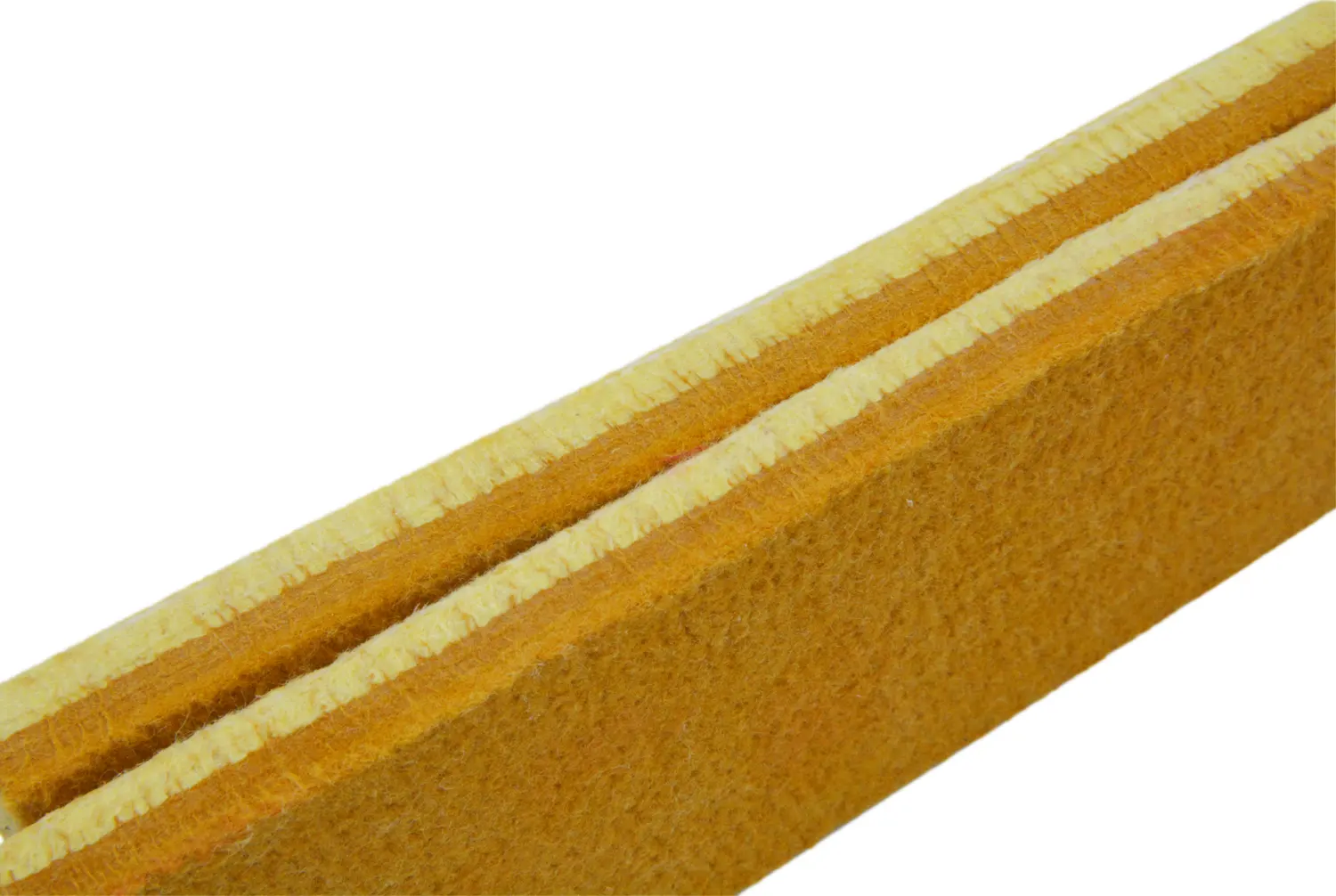
A Kevlar conveyor belt is an endless industrial felt belt manufactured using Kevlar fibers, one of the world’s most recognized high-performance aramid materials.
Unlike rubber or PVC conveyor belts used in general material handling, Kevlar felt belts are specifically designed for applications involving elevated temperatures and sensitive product surfaces.
Their primary functions include:
- Transporting high-temperature materials
- Protecting product surfaces from scratches
- Reducing friction during conveying
- Maintaining stable performance under continuous operation
These characteristics make Kevlar conveyor belts particularly valuable in aluminium extrusion, glass manufacturing, metal processing, and other industrial applications where both heat resistance and surface protection are essential.
How Does a Kevlar Conveyor Belt Work?
The working principle of a Kevlar conveyor belt is relatively simple but highly effective.
Instead of allowing hot products to come into direct contact with metal rollers or hard conveyor surfaces, the felt belt creates a soft cushioning layer between the product and the conveying equipment.
During operation, the belt performs several functions simultaneously:
- Supports the product during transportation
- Reduces direct friction
- Minimizes impact during movement
- Protects finished surfaces from scratches
- Maintains dimensional stability under elevated temperatures
Unlike ordinary conveyor materials that may soften or deteriorate under heat, Kevlar fibers retain their mechanical strength and structural integrity, allowing the belt to operate reliably in demanding industrial environments.
How Is a Kevlar Conveyor Belt Constructed?
Although designs vary by manufacturer, most industrial Kevlar conveyor belts share several common construction features.
Endless Belt Design
Most belts are manufactured as endless loops to provide smooth, continuous conveying without mechanical joints that could affect stability or wear.
Needle-Punched Felt Structure
Industrial Kevlar felt belts are typically produced using needle-punching technology, where thousands of barbed needles mechanically interlock the fibers into a dense, durable felt structure.
This manufacturing process creates:
- Uniform thickness
- Excellent wear resistance
- High mechanical stability
- Consistent conveying performance
Heat-Resistant Fiber Composition
Kevlar fibers provide the belt with:
- High tensile strength
- Excellent abrasion resistance
- Stable performance under continuous heat exposure
Depending on the application, manufacturers may also combine Kevlar with other heat-resistant fibers to optimize performance and service life.
Key Properties of Kevlar Conveyor Belts
Excellent Heat Resistance
One of the most important characteristics of Kevlar conveyor belts is their ability to perform in high-temperature environments.
Compared with conventional conveyor materials, Kevlar maintains its structural stability under continuous heat exposure, making it suitable for many industrial conveying applications.
High Tensile Strength
Kevlar is well known for its exceptional strength-to-weight ratio.
For conveyor belts, this provides several benefits:
- Reduced stretching
- Improved dimensional stability
- Better tracking performance
- Longer operational life
Outstanding Abrasion Resistance
Continuous conveying exposes belts to constant friction.
Kevlar fibers offer excellent resistance to wear, helping reduce material loss and extend replacement intervals.
Surface Protection
Unlike hard conveyor materials, felt provides a soft contact surface.
This helps reduce:
- Surface scratches
- Dent marks
- Mechanical damage
- Cosmetic defects
For manufacturers producing decorative aluminum profiles, maintaining surface quality is often just as important as dimensional accuracy.
Long Service Life
By combining heat resistance, mechanical strength, and abrasion resistance, Kevlar conveyor belts generally provide a longer service life than conventional industrial belts operating under similar conditions.
Actual lifespan depends on factors such as operating temperature, production speed, load conditions, and maintenance practices.
Common Applications of Kevlar Conveyor Belts
Kevlar conveyor belts are used in industries where products remain hot during transportation or where surface protection is essential.
Typical applications include:
Aluminium Extrusion
This is one of the most common applications.
Kevlar felt belts are used to transport aluminum profiles after extrusion while helping protect their surfaces during production.
Glass Manufacturing
Glass products often remain at elevated temperatures during processing.
Kevlar conveyor belts provide stable conveying while minimizing surface contact damage.
Metal Processing
Various metal manufacturing processes require heat-resistant conveying systems capable of operating under continuous thermal loads.
Industrial Heat Treatment
Kevlar felt belts are also used in certain heat treatment and thermal processing applications where conventional conveyor materials cannot withstand the operating conditions.
Why Kevlar Conveyor Belts Are Important in Aluminium Extrusion
Among all industrial applications, aluminium extrusion places particularly demanding requirements on conveyor materials.
Freshly extruded aluminum profiles leave the die at extremely high temperatures and remain relatively soft until they cool. During this stage, even slight contact with hard surfaces can result in scratches, dents, or surface contamination.
Kevlar conveyor belts help address these challenges by providing:
- A soft conveying surface that reduces friction and minimizes surface damage
- Reliable performance under elevated temperatures
- Stable handling that supports consistent profile movement
- Improved product quality by reducing cosmetic defects
- Longer operating life compared with conventional conveyor materials in high-temperature environments
These advantages make Kevlar felt belts a key component of many aluminium extrusion production lines, particularly in sections where both heat resistance and abrasion resistance are required.
Kevlar vs PBO vs Nomex vs Polyester: Which Felt Belt Should You Choose?
One of the most common misconceptions is that a Kevlar conveyor belt is suitable for every stage of an aluminium extrusion line. In reality, different sections of the production line operate at different temperatures, so manufacturers typically use different felt materials to achieve the best balance between performance, service life, and cost.
The table below provides a general comparison of the four most commonly used heat-resistant felt materials.
| Material | Typical Maximum Working Temperature* | Key Advantages | Typical Applications |
|---|---|---|---|
| PBO | Up to 600°C | Highest heat resistance, excellent thermal stability | Immediately after the die exit |
| Kevlar | Up to 480°C | High heat resistance, excellent abrasion resistance, high tensile strength | Early conveying section after initial cooling |
| Nomex | Up to 280°C | Good heat resistance, dimensional stability, cost-effective | Medium-temperature conveying stages |
| Polyester | Up to 180°C | Economical, smooth surface, suitable for lower temperatures | Final cooling and handling sections |
Temperature ratings are general industry references. Actual performance depends on product design, operating conditions, contact time, and production environment.
Rather than selecting the material with the highest temperature rating, manufacturers typically choose the material that best matches the operating conditions of each section. This approach improves both production efficiency and the service life of the felt products.
How to Choose the Right Kevlar Conveyor Belt
Selecting the right Kevlar conveyor belt involves more than simply checking its heat resistance. Several production factors should be evaluated to ensure reliable performance.
1. Evaluate the Operating Temperature
The first consideration is the actual working temperature.
Ask questions such as:
- What is the profile temperature when it contacts the belt?
- Is the heat continuous or intermittent?
- Are there temperature fluctuations during production?
If the operating temperature exceeds the suitable range for Kevlar, PBO felt may be a more appropriate choice.
2. Consider the Product Surface Requirements
Not all aluminum profiles have the same surface quality requirements.
Products with decorative finishes, anodized surfaces, or polished appearances require conveyor materials that minimize friction and reduce the risk of scratches.
A properly selected felt belt helps preserve surface quality throughout production.
3. Match the Belt to Production Speed
High-speed extrusion lines place greater demands on conveyor materials.
The selected belt should provide:
- Stable tracking
- Good wear resistance
- Consistent surface contact
- Reliable performance during continuous operation
4. Consider Service Life and Maintenance Costs
The lowest purchase price is not always the lowest operating cost.
A higher-quality Kevlar conveyor belt may provide:
- Longer replacement intervals
- Reduced production downtime
- Lower maintenance frequency
- Better overall operating efficiency
Evaluating the total cost of ownership often leads to a more cost-effective solution over the long term.
Common Problems with Kevlar Conveyor Belts
Even high-quality belts require proper installation, operation, and maintenance. Some of the most common issues include:
Premature Wear
Possible causes include:
- Excessive operating temperatures
- Improper belt tension
- Continuous overload
- Misaligned conveying equipment
Regular inspection and correct operating parameters can help extend belt life.
Surface Contamination
Dust, aluminum particles, and production residues can accumulate on the belt surface over time.
If not removed, contaminants may increase friction or affect the surface finish of aluminum profiles.
Routine cleaning helps maintain consistent conveying performance.
Belt Tracking Problems
Improper alignment may cause the belt to drift during operation.
Potential causes include:
- Uneven roller alignment
- Incorrect belt tension
- Worn conveyor components
Regular equipment inspection helps maintain stable belt tracking.
Reduced Heat Resistance Over Time
Long-term exposure to temperatures beyond the belt’s design limits can gradually reduce performance and shorten service life.
Selecting the appropriate felt material for each section of the production line is one of the most effective ways to avoid premature failure.
Maintenance Tips for Longer Belt Life
Proper maintenance helps maximize both performance and service life.
Recommended practices include:
- Inspect the belt regularly for signs of wear or damage.
- Keep the belt surface clean to reduce contamination.
- Check conveyor alignment and belt tension periodically.
- Avoid operating beyond the recommended temperature range.
- Replace worn belts before they begin affecting product quality.
A preventive maintenance program not only extends belt life but also reduces unexpected downtime and production losses.
Calm’s High-Temperature Felt Conveyor Belt Solutions
For more than 20 years, Calm has specialized in manufacturing high-temperature felt products for the aluminium extrusion industry.
Rather than offering a single material, we provide a complete range of heat-resistant felt solutions designed for different stages of the extrusion process.
Our product range includes:
- PBO Felt Belts
- Kevlar Conveyor Belts
- Nomex Felt Belts
- Polyester Felt Belts
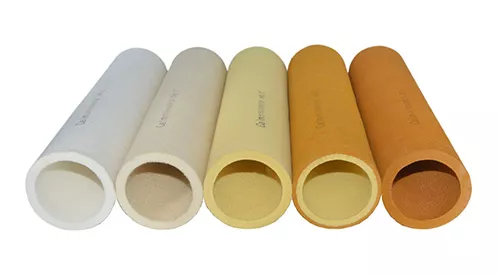
- Felt Rollers
- Felt Pads
- Spacer Sleeves
- Felt Strips
By matching the appropriate material to each operating temperature, manufacturers can improve profile protection, optimize production efficiency, and reduce overall operating costs.
Whether you are upgrading an existing production line or selecting materials for a new extrusion facility, choosing the right felt solution is an important step toward achieving consistent product quality.
FAQs
What is a Kevlar conveyor belt?
A Kevlar conveyor belt is a high-temperature industrial felt belt made with Kevlar fibers. It is designed to transport hot materials while providing excellent heat resistance, abrasion resistance, and surface protection.
What temperature can a Kevlar conveyor belt withstand?
Kevlar felt belts are commonly used in applications with operating temperatures of up to approximately 480°C, although actual performance depends on belt construction and production conditions.
What industries use Kevlar conveyor belts?
Kevlar conveyor belts are widely used in aluminium extrusion, glass manufacturing, metal processing, and other industrial applications involving elevated temperatures and sensitive product surfaces.
What is the difference between Kevlar and Nomex conveyor belts?
Kevlar offers higher heat resistance, greater tensile strength, and better abrasion resistance, making it suitable for higher-temperature sections of an extrusion line. Nomex is typically used in medium-temperature applications where a balance of performance and cost is required.
How long does a Kevlar conveyor belt last?
Service life varies depending on operating temperature, production speed, load conditions, maintenance, and overall working environment. Proper material selection and regular maintenance can significantly extend belt life.
Conclusion
A Kevlar conveyor belt is far more than a heat-resistant conveying material. It plays a critical role in protecting product surfaces, maintaining production stability, and improving efficiency in high-temperature manufacturing environments.
For aluminium extrusion, selecting the right felt material for each stage of the production line is just as important as choosing the right extrusion equipment. While Kevlar is an excellent choice for many high-temperature conveying applications, it delivers the best results when used as part of a complete heat-resistant felt system that also includes PBO, Nomex, and Polyester products where appropriate.
Understanding the operating conditions, temperature requirements, and production goals of your extrusion line will help you choose a conveyor belt solution that maximizes both product quality and long-term performance.
Need Help Selecting the Right Felt Belt?
Whether you’re upgrading an existing extrusion line or choosing materials for a new project, Calm can help you select the most suitable heat-resistant felt solution for your application.
Contact our specialists at [email protected] for expert technical advice and customized recommendations.